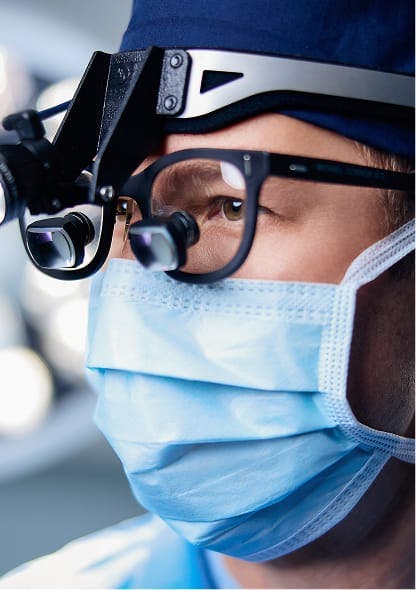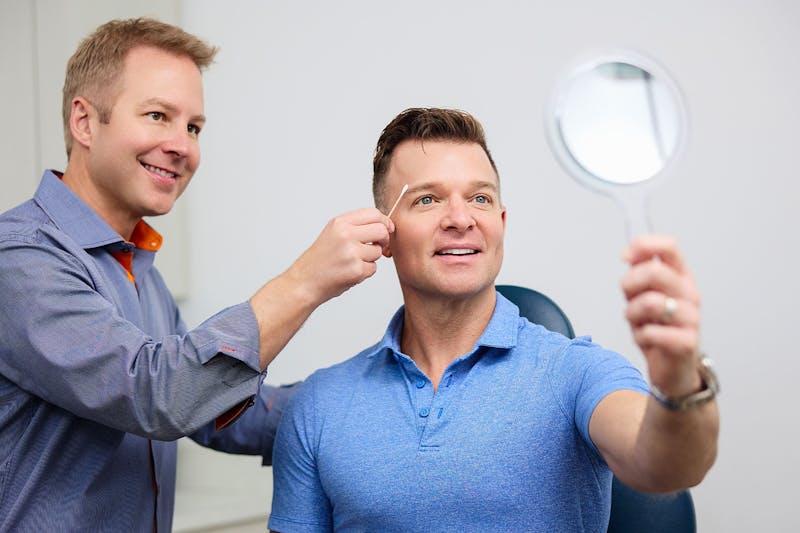
A natural-looking eyelid lift comes down to two things: an accurate diagnosis of what's causing the tired or heavy appearance, and a surgeon trained specifically in the anatomy of the eye. When either piece is missing, even a technically clean surgery can look overdone or simply not like the patient's own eyes. Dr. Michael Connor is a fellowship-trained oculoplastic surgeon at Oculoplastic & Orbital Consultants in Palm Beach Gardens, where eyelid surgery is the exclusive focus of his practice.
This blog looks at why eyelid surgery outcomes vary so widely, the three distinct problems that can create a tired-looking eye, and what recovery involves for most patients.
Not Every Tired Look Has the Same Cause
Three different changes around the eye can create the same tired look, and each calls for a different surgical approach. Treating the wrong one, or addressing only one cause when two are present, is a common reason results end up looking off.
The underlying cause usually falls into one of three categories:
- Heavy brow: When the brow sits lower than it used to, it can create a hooded look that appears to start at the eyelid. A brow lift repositions the brow itself instead of removing eyelid skin.
- Excess eyelid skin: Loose skin along the upper lid can fold over and create an aged, tired appearance. Blepharoplasty removes this excess skin to help restore a smoother, more defined lid.
- Droopy eyelid (ptosis): When the muscle responsible for lifting the eyelid weakens, the lid itself sits too low and can affect vision. Ptosis repair tightens that muscle to help improve both function and appearance.
These conditions can occur alone, together, or all three at once, which is why a thorough evaluation matters more than the procedure a patient assumes they need.
Why Training Makes the Difference
The eyelid is thin, mobile, and packed with muscles that control both movement and eye protection, making it one of the least forgiving areas of the face to operate on. Removing too much skin or fat can leave the eye looking hollow, pulled, or startled instead of rested.
General plastic surgery training covers eyelid procedures only briefly. Oculoplastic surgery is a separate specialty built around a two-year fellowship focused entirely on the eyelid, brow, and surrounding structures. Dr. Connor completed his fellowship at Texas Oculoplastic Consultants, the largest oculoplastic practice in the country. During that time, he performed more than 1,200 surgical procedures before returning to Florida to practice. That focused training is one reason other physicians refer their own eyelid cases to him. Correcting results from surgery performed elsewhere is also an area of his expertise.
What Recovery Actually Looks Like
Concerns about downtime and pain stop many people from scheduling a consultation, even when a well-planned lift could make a real difference in how rested they look. For most patients, recovery is more manageable than expected:
- Downtime: Most patients return to normal daily activities within 7 to 10 days, and Mayo Clinic notes that bruising and swelling around the eyes typically improve within 10 to 14 days.
- Discomfort: Healing typically feels like tightness or mild discomfort, with significant pain uncommon.
- Makeup: Many patients can resume wearing makeup around 10 to 14 days after surgery, depending on individual healing.
- Age: Eyelid surgery isn't only for older patients. People in their 30s and 40s often choose it for genetics, puffiness, or excess skin that runs in the family.
Dr. Connor: A Fellowship-Trained Approach to Natural Eyelid Results
A heavy brow, excess skin, and a weakened eyelid muscle each need a different fix. Natural results depend on identifying which one applies before any surgery is planned. Dr. Connor's fellowship training and focus on oculoplastic surgery are why his patients, and the physicians who trust him with their own care, choose precision over a one-size-fits-all approach. Schedule a private consultation to find out which of these issues, if any, applies to you.
This information is provided for educational purposes only and does not replace a consultation with a board-certified oculoplastic surgeon. Outcomes, risks, and suitability vary from patient to patient.